2023年10月15日日曜日

音楽 : Christopher Hobbs / John Adams / Gavin Bryars – Ensemble Pieces


Christopher Hobbs / John Adams / Gavin Bryars – Ensemble Pieces


Obscure – obscure no. 2, Island Records – obscure no. 2

レコード, LP, Grey labels

UK

1975年

Classical

Modern Classical, Minimal

収録曲

A1Christopher Hobbs–Aran
Organ [Reed Organ], Toy Piano, Triangle [Triangles], Drums – John White
Organ [Reed Organ], Triangle [Triangles], Wood Block [Wood Blocks], Cymbal [Cymbals] – Gavin Bryars
Tubular Bells, Triangle [Triangles], Cowbell [Cowbells], Toy Piano – Christopher Hobbs
John AdamsAmerican Standard
Engineer [Recording Engineer (U.S.A.)] – Alden Jenks
Flute, Clarinet, Clarinet [Doubling Bass-clarinet, Doubling Bass-drum], Tuba, Percussion [Trap Set], Violin, Viola [2 Violas], Cello, Double Bass, Harp – The New Music Ensemble Of The San Francisco Conservatory Of Music*
A2 (i)–John Philip Sousa
A2 (ii)–Christian Zeal And Activity
A2 (iii)–Sentimentals
B1Christopher Hobbs–McCrimmon Will Never Return
Organ [Reed Organ] – Christopher Hobbs, Gavin Bryars
B2Gavin Bryars–1, 2, 1-2-3-4
Cello – Cornelius Cardew
Double Bass – Gavin Bryars
Drums – Mike Nicolls
Engineer – Phil Ault
Guitar – Derek Bailey
Oboe – Andy Mackay
Piano – Christopher Hobbs
Trombone – Paul Nieman
Violin [Violins] – Stuart Deeks
Vocals – Brian Eno, Celia Gollin

会社名など

クレジット

ノート

A2: From a live performance by The New Music Ensemble of The San Francisco Conservatory of Music at the Museum of Art on March 23rd 1973.
Design by John Bonis of CCS

on labels:
['obscure' logo]
['island records' logo]
℗ 1975 Island Records Ltd

on jacket, rear:
obscure no. 2
['obscure' logo]
Manufactured and distributed by Island Records Ltd.

on spine:
obscure no. 2
℗ 1975 Island Records Ltd

1975 first press (grey label Island edition).

Artist names are transposed erroneously on labels:
Side A credits Christopher Hobbs & Gavin Bryars
Side B credits Christopher Hobbs & John Adams

バーコードとその他の識別子

  • Matrix / Runout (Label A): OBSCURE 2-A
  • Matrix / Runout (Label B): OBSCURE 2-B
  • Matrix / Runout (Runout A, stamped): GM OBSCURE NO·2·AI >
  • Matrix / Runout (Runout B, stamped): GM OBSCURE NO·2·BI >
  • Matrix / Runout (Runout A, hand-etched): 1
  • Matrix / Runout (Runout B, hand-etched, variant 1): 2
  • Matrix / Runout (Runout B, hand-etched, variant 2): 3
  • Matrix / Runout (Runout B, hand-etched, variant 3): 4

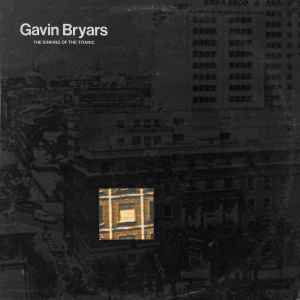
音楽 : Gavin Bryars – The Sinking Of The Titanic


Gavin Bryars – The Sinking Of The Titanic


Obscure – obscure no.1, Island Records – obscure no.1

レコード, LP, Grey labels

UK

1975年

Electronic, Classical

Modern Classical, Minimal

収録曲

AThe Sinking Of The Titanic
Conductor, Piano – Gavin Bryars
Directed By [Director] – Howard Davidson, Howard Rees
Double Bass – Sandra Hill
Musical Box [Music Box] – Angela Bryars
Strings – The Cockpit Ensemble
Violin – John Nash (2)
Voice [Spoken] – Miss Eva Hart*
BJesus' Blood Never Failed Me Yet
Conductor – Gavin Bryars
Directed By [Director] – Howard Davidson, Howard Rees
Double Bass – Sandra Hill
Guitar – Derek Bailey
Orchestra – The Cockpit Ensemble
Organ – Michael Nyman
Tuba – John White
Violin – John Nash (2)

会社名など

クレジット

ノート

Artwork by John Bonis of CCS

on labels:
['obscure' logo]
['island records' logo]
℗ 1975 Island Records Ltd

on jacket, rear:
obscure no.1
['obscure' logo]
Manufactured and distributed by Island Records Ltd.

on spine:
obscure no. 1
℗1975 Island Records Ltd.

―
1975 first press (grey label Island edition).
Printed on white inner sleeve: "PATENT Nos. 1,125,555" and "MADE IN GREAT BRITAIN."

バーコードとその他の識別子

  • Matrix / Runout (Label A): OBSCURE 1-A
  • Matrix / Runout (Label B): OBSCURE 1-B
  • Matrix / Runout (Runout A, stamped): OBSCURE NO·I·AI GM
  • Matrix / Runout (Runout B, stamped): K̶·̶4̶0̶I̶3̶4̶·̶B̶I̶ GM OBSCURE NO·I·BI
  • Matrix / Runout (Runout A, stamped, rotated through 90° clockwise): ∴
  • Matrix / Runout (Runout B, stamped, rotated through 90° clockwise): B
  • Matrix / Runout (Runout A, hand-etched): 4
  • Matrix / Runout (Runout B, hand-etched): 3

音楽 : The Complete Obscure Records Collection (CD)


** Limited Collector Edition of 1.000 copies. Includes hand-numbered certificate, 10 CDs in faithful replicas of the original covers and polylined inner sleeves, a 80-page LP-sized book in English, all housed in a custom lavish linen box. ** In a very special Soundohm exclusive, we’re thrilled to announce pre-orders for the first ever box set gathering the entire ten album collection of Brian Eno’s Obscure Records, originally issued between 1975 and 1978. Containing the debut releases of Gavin Bryars, Michael Nyman, John Adams, David Toop, Max Eastley, Harold Budd, Christopher Hobbs, Jan Steele, and Simon Jeffes / The Penguin Café Orchestra, in addition to important works by John Cage, Tom Phillips, and John White, not to mention Eno’s seminal “Discreet Music”, the label’s output collectively amounts to a monument in the history of minimalist experimental music that has captivated audiences since it first appeared - a rare bridge between the avant-garde and popular realms. This remarkable collection, coming as a deluxe box set designed by Bruno Stucchi / dinamomilano, and issued by Dialogo in CD and vinyl editions completely remastered by Andrea Marutti - both including a book filled with rare photos, archival material and texts by, among others, Gavin Bryars, Bradford Bailey, David Toop, Max Eastley, Richard Bernas, and Tom Recchion - marks the first time this seminal series has received a complete repress on any format, with a number of the albums within having never been reissued on vinyl and/or CD since their original release. You can't get any better than this, simply a dream come true.

Over the last few years, the Italian imprint, Dialogo, has showed a remarkable dedication to the history of experimental music via reissues of seminal artefacts from the Cramps catalog, and important albums by Piero Umiliani, Ennio Morricone, Bruno Nicolai, Enrico Rava, and others. This initiative now takes on a towering scale with the first ever box set gathering the entire ten album collection of Brian Eno’s Obscure Records, originally issued between 1975 and 1978. A truly groundbreaking body of recordings - many of which have remained out of print and difficult to find for decades - it contains some of the most important, influential, and enduring music to emerge during the second half of the 20th Century, which collectively reconfigured the terms of minimalism and laid the groundwork for the emerging movement of ambient music over its short, three year run.

Issued in both CD and vinyl editions of 1000 copies, with the later accompanied by a hand-numbered certificate, each box set contains all of Obscure’s albums, completely remastered by Andrea Marutti and housed in faithful replicas of their original covers and liner notes, as well as an 80/130-page book (respectively, LP/CD) with texts / contributions by Gavin Bryars, Bradford Bailey, David Toop, Max Eastley, Richard Bernas, Tom Recchion, Carlo Boccadoro, Walter Rovere and Bruno Stucchi, and rare photos, including several by Roberto Masotti, this historic collection marks the first time such a seminal series has received a complete repress. Stunningly produced with the full collaboration of all the artists or their estates, this is easily one of the most exciting, important and hotly anticipated releases of the year.

One of the great anomalies and triumphs of 20th Century recording, Obscure Records was initially conceived by Brian Eno as a vehicle for the work of his yet to be recorded friend, Gavin Bryars, before taking on grander ambitions. Having left Roxy Music in 1973 and launched his own solo career, during this period Eno had become immersed in London’s thriving experimental music scene - occasionally playing with Cornelius Cardew’s Scratch Orchestra and Portsmouth Sinfonia - cultivating a deep connection with the avant-garde that had begun in his student years, finding a deep sympathy with his own ideas and approaches among the artists he encountered there. Among these were Bryars, Christopher Hobbs, David Toop, and Max Eastley, who, in addition to Eno and a lone American, John Adams, would contribute the first suite of works: Gavin Bryars’ “The Sinking of the Titanic”, Christopher Hobbs, John Adams, and Gavin Bryars’ “Ensemble Pieces”, Brian Eno’s “Discreet Music”, David Toop and Max Eastley’s “New and Rediscovered Musical Instrument” - released by Obscure in 1975.

Backed, manufactured ,and distributed Island Records, working under the curatorial direction of Eno, Bryars, and Michael Nyman (then primary known as a writer), Obscure would rapidly emerge as a rare example of a record label entirely committed to the radical ideas of the artists it involved, releasing two more suites of albums in 1976 and 1978 - containing the debut recordings of Nyman, Jan Steele, Simon Jeffes / The Penguin Café Orchestra, and Harold Budd, in addition to important works by Eno, John Cage, Tom Phillips, and John White, before Eno followed the path toward ambient music and moved to New York.

When viewed collectively, the Obscure catalog - which, in addition to the aforementioned four LPs, contains Jan Steele and John Cage’s “Voices and Instruments” (1976), Michael Nyman’s “Decay Music” (1976) Simon Jeffes / The Penguin Café Orchestra’s “Music from The Penguin Café” (1976), John White and Gavin Bryars’ “Machine Music” (1978), Tom Phillips, Gavin Bryars, and Fred Orton’s “Irma” (1978) and Harold Budd’s “The Pavilion of Dreams” ‎(1978) - reveals a remarkable, and previously unexplored counterpoint - bridging the United Kingdom and the American West Coast - to the dominant threads of minimal and experimental music, centred in New York that had long dominated the public consciousness.

Equally as noteworthy was the belief, rubbing below the label’s directives, that experimental music should be accessible and available to listeners of popular music, encountering Eno, Bryars, and Nyman setting out to bridge the gap. While it achieved this more than most of contemporaries, it would take decades for the full impact and influence of Obscure’s ten albums to unfold, eventually giving way to numerous discreet practices within experimental music embraced by successive generations of composers. Despite this, the majority of the label's output has been unavailable on vinyl for years, with a number of releases having never received a CD reissue.

Illuminating the remarkable, and largely otherwise undocumented, creative ferment within and between the British and American scenes of experimental music during the mid to late 1970s, Dialogo’s incredible “The Complete Obscure Records Collection” deluxe box set designed by Bruno Stucchi / dinamomilano - made in full collaboration with all of the composers or their estates - contains the entire ten album output of the label, completely remastered and housed in faithful replicas of their original covers and liner notes, as well as an 80/130-page book (respectively, LP/CD).

This historic collection marks the first time the seminal Obscure catalgoue has received a complete repress on both vinyl and CD; simply a dream come true.

音楽 : The Complete Obscure Records Collection (LP)


Various Artists

The Complete Obscure Records Collection (10LP Deluxe Box + 80-page Book)

Label: Dialogo

Format: 10LP Box + 80-page Booklet

** Limited Collector Edition of 1.000 copies. Includes hand-numbered certificate, 10 LPs in faithful replicas of the original covers and polylined inner sleeves, a 80-page LP-sized book in English, all housed in a custom lavish linen box. ** In a very special Soundohm exclusive, we’re thrilled to announce pre-orders for the first ever box set gathering the entire ten album collection of Brian Eno’s Obscure Records, originally issued between 1975 and 1978. Containing the debut releases of Gavin Bryars, Michael Nyman, John Adams, David Toop, Max Eastley, Harold Budd, Christopher Hobbs, Jan Steele, and Simon Jeffes / The Penguin Café Orchestra, in addition to important works by John Cage, Tom Phillips, and John White, not to mention Eno’s seminal “Discreet Music”, the label’s output collectively amounts to a monument in the history of minimalist experimental music that has captivated audiences since it first appeared - a rare bridge between the avant-garde and popular realms. This remarkable collection, coming as a deluxe box set designed by Bruno Stucchi / dinamomilano, and issued by Dialogo in CD and vinyl editions completely remastered by Andrea Marutti - both including a book filled with rare photos, archival material and texts by, among others, Gavin Bryars, Bradford Bailey, David Toop, Max Eastley, Richard Bernas, and Tom Recchion - marks the first time this seminal series has received a complete repress on any format, with a number of the albums within having never been reissued on vinyl and/or CD since their original release. You can't get any better than this, simply a dream come true.

Over the last few years, the Italian imprint, Dialogo, has showed a remarkable dedication to the history of experimental music via reissues of seminal artefacts from the Cramps catalog, and important albums by Piero Umiliani, Ennio Morricone, Bruno Nicolai, Enrico Rava, and others. This initiative now takes on a towering scale with the first ever box set gathering the entire ten album collection of Brian Eno’s Obscure Records, originally issued between 1975 and 1978. A truly groundbreaking body of recordings - many of which have remained out of print and difficult to find for decades - it contains some of the most important, influential, and enduring music to emerge during the second half of the 20th Century, which collectively reconfigured the terms of minimalism and laid the groundwork for the emerging movement of ambient music over its short, three year run.

Issued in both CD and vinyl editions of 1000 copies, with the later accompanied by a hand-numbered certificate, each box set contains all of Obscure’s albums, completely remastered by Andrea Marutti and housed in faithful replicas of their original covers and liner notes, as well as an 80/130-page book (respectively, LP/CD) with texts / contributions by Gavin Bryars, Bradford Bailey, David Toop, Max Eastley, Richard Bernas, Tom Recchion, Carlo Boccadoro, Walter Rovere and Bruno Stucchi, and rare photos, including several by Roberto Masotti, this historic collection marks the first time such a seminal series has received a complete repress. Stunningly produced with the full collaboration of all the artists or their estates, this is easily one of the most exciting, important and hotly anticipated releases of the year.

One of the great anomalies and triumphs of 20th Century recording, Obscure Records was initially conceived by Brian Eno as a vehicle for the work of his yet to be recorded friend, Gavin Bryars, before taking on grander ambitions. Having left Roxy Music in 1973 and launched his own solo career, during this period Eno had become immersed in London’s thriving experimental music scene - occasionally playing with Cornelius Cardew’s Scratch Orchestra and Portsmouth Sinfonia - cultivating a deep connection with the avant-garde that had begun in his student years, finding a deep sympathy with his own ideas and approaches among the artists he encountered there. Among these were Bryars, Christopher Hobbs, David Toop, and Max Eastley, who, in addition to Eno and a lone American, John Adams, would contribute the first suite of works: Gavin Bryars’ “The Sinking of the Titanic”, Christopher Hobbs, John Adams, and Gavin Bryars’ “Ensemble Pieces”, Brian Eno’s “Discreet Music”, David Toop and Max Eastley’s “New and Rediscovered Musical Instrument” - released by Obscure in 1975.

Backed, manufactured ,and distributed Island Records, working under the curatorial direction of Eno, Bryars, and Michael Nyman (then primary known as a writer), Obscure would rapidly emerge as a rare example of a record label entirely committed to the radical ideas of the artists it involved, releasing two more suites of albums in 1976 and 1978 - containing the debut recordings of Nyman, Jan Steele, Simon Jeffes / The Penguin Café Orchestra, and Harold Budd, in addition to important works by Eno, John Cage, Tom Phillips, and John White, before Eno followed the path toward ambient music and moved to New York.

When viewed collectively, the Obscure catalog - which, in addition to the aforementioned four LPs, contains Jan Steele and John Cage’s “Voices and Instruments” (1976), Michael Nyman’s “Decay Music” (1976) Simon Jeffes / The Penguin Café Orchestra’s “Music from The Penguin Café” (1976), John White and Gavin Bryars’ “Machine Music” (1978), Tom Phillips, Gavin Bryars, and Fred Orton’s “Irma” (1978) and Harold Budd’s “The Pavilion of Dreams” ‎(1978) - reveals a remarkable, and previously unexplored counterpoint - bridging the United Kingdom and the American West Coast - to the dominant threads of minimal and experimental music, centred in New York that had long dominated the public consciousness.

Equally as noteworthy was the belief, rubbing below the label’s directives, that experimental music should be accessible and available to listeners of popular music, encountering Eno, Bryars, and Nyman setting out to bridge the gap. While it achieved this more than most of contemporaries, it would take decades for the full impact and influence of Obscure’s ten albums to unfold, eventually giving way to numerous discreet practices within experimental music embraced by successive generations of composers. Despite this, the majority of the label's output has been unavailable on vinyl for years, with a number of releases having never received a CD reissue.

Illuminating the remarkable, and largely otherwise undocumented, creative ferment within and between the British and American scenes of experimental music during the mid to late 1970s, Dialogo’s incredible “The Complete Obscure Records Collection” deluxe box set designed by Bruno Stucchi / dinamomilano - made in full collaboration with all of the composers or their estates - contains the entire ten album output of the label, completely remastered and housed in faithful replicas of their original covers and liner notes, as well as an 80/130-page book (respectively, LP/CD).

This historic collection marks the first time the seminal Obscure catalgoue has received a complete repress on both vinyl and CD; simply a dream come true.